Achieving the Triple ‘L’

Achieving the Triple ‘L’

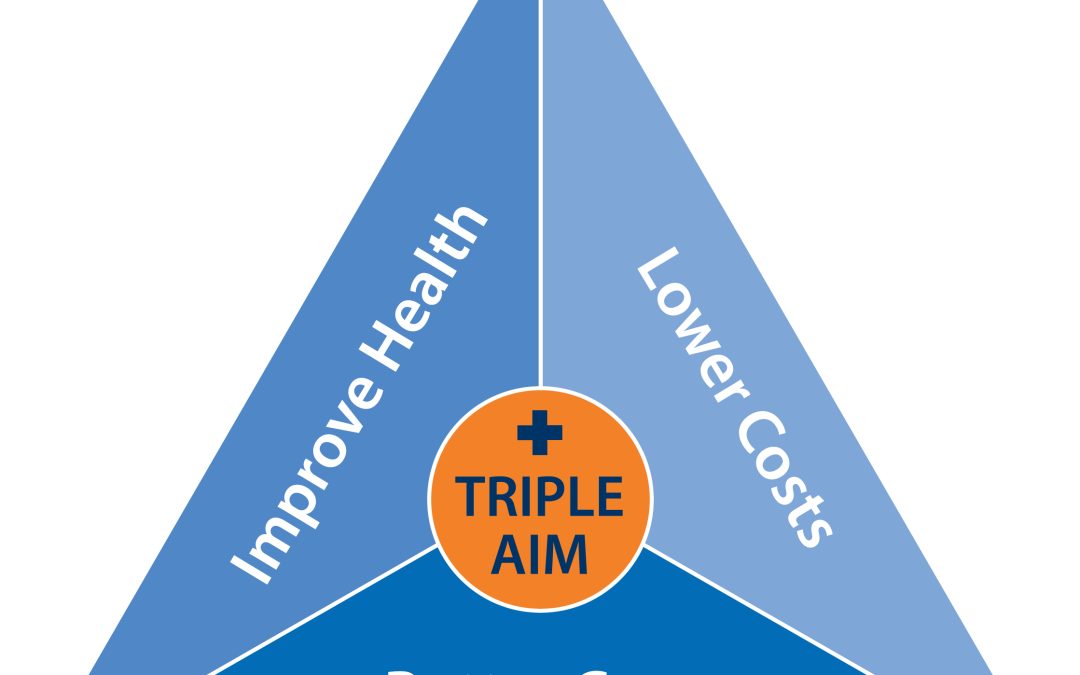
In the healthcare business, we talk a fair amount about the Triple Aim for improving the U.S. health care system. The Triple Aim is a framework developed by the Institute for Healthcare Improvement (IHI) that describes an approach to optimizing health system performance. It is the IHI’s belief that innovative designs must be developed to simultaneously pursue three dimensions, which they refer to as the Triple Aim:

  1. Improving the patient experience of care (including quality and satisfaction)
  2. Improving the health of populations
  3. Reducing the per capita cost of health care

Achieving the Triple Aim in healthcare is not easy, requires considerable effort, and demands focus.

Leadership guru, John Maxwell refers to the practices of Listening, Learning and Leading as necessary for effective leadership.  Achieving what we are calling the Triple L is as critical for successful leadership and effective human relations as the Triple Aim is to improving healthcare.

When collaborating with patients, partners and fellow providers or administrators there is a simple formula that we can follow to effectively help others be more successful.  We first must understand them.  We can then educate them.  And finally, we can collaborate with them to help them. As healthcare leaders it is imperative that we strive to improve and the best way to do that is to continuously improve our teams.


Understand Them

This is the premise that our practice is focused on “you” and “your” needs and desires.  It is all about “you” as we ask questions so that we can learn from “you” as much as possible.  We call it “getting to the truth.”  Getting to the truth is critical to understanding someone else and what it will take to best help them be more successful, whether that is improved health for a patient, or increased motivation, additional inspiration, encourage innovation, more effective communication or greater productivity for co-workers.

 Getting to the truth requires excellent communication skills.  Communication skills are a critical success factor and require more than speaking and writing skills.  Effective communication skills begin with listening.  Did you ever talk to someone and feel as though they were listening but not hearing you?  Better yet, did you ever listen and instead of trying to understand them, focus primarily on preparing a response?  You are surely not alone!  In fact, it would be a great gamble to bet on everyone admitting to having committed this very act, not once, but repeatedly.

 We must listen to hear and understand whomever we are communicating with if we want to get as close to the truth as we can.  That requires patience and focus. Listen to hear by asking questions, repeating what we think we understand for validation, and asking for help from the one answering the questions so that the two-way communication is truly two-way and not one-way.

EXAMPLE: “John, am I correct in my understanding that you believe you need additional training to effectively negotiate our payer contracts?”


Educate Them

After understanding others, we can help them understand us and what capacity we possess to help them.  As we listened and learned about them, we need to help them listen and learn about the value that we can deliver to them.  And we must do so in that order.  The principles and skills are similar.  We must communicate effectively so that they can understand how we can assist.  In this situation, we must eliminate assumptions such as “I’ve said it so they must understand it.”  No! No! No!  It does not work that way! We have all heard about what occurs when we assume something, right?  So, how do we eliminate assumptions?  We ask questions so that we have ample two-way communications to assist with more thorough understanding.  We make sure we repeat what was said and show concern for others by encouraging them and allowing them to ask any questions that they may have.

Watch facial expressions and body posture to better understand if they understand.  In this era of remote meetings that is not always easy but facial expressions and voice inflections still assist with that effort. If someone has a perplexed look, chances are they have questions or doubts about what has been communicated.  If they cross their arms, we should stop and try to engage them versus what is referred to in the sales profession as “telling.”  Telling is allowable only if in the context of two-way communication versus simply spouting out your story.  Without effectively educating the other party about what your capabilities are, they will never see clearly how you can help them.

EXAMPLE: “John, payer contracts can be tricky to fully understand.  It took me years to be able to accurately represent our practice and get an agreement with payers to fairly compensate us.  It is exciting that you want to elevate your knowledge to the next level, and I would be delighted to spend time with you to answer your questions and to share what I have learned through the years.”


Help Them

This is a “we” concept that must always include thoughts such as teamwork, collaboration and continued communication.  Helping someone is truly servant leadership, because we are giving of ourselves to help them be more successful.  It takes intentional effort, even after years of practicing.  Practice does not make perfect, but if practicing good habits coupled with good intentions, it does make better.  When others understand how much we care because we listened effectively and learned and then we educate them on our ability to assist, they will be much more receptive to accepting the help that we are offering.  Remember this: people want to know how much we care more than know how much we know.

EXAMPLE: “John, you are growing impressively in your knowledge of payer contract negotiations.  How about you ask me additional questions that you have about areas that you wish to further increase your knowledge?” After that, let me ask you questions to help you take your understanding to yet another level.


Triple L

Combining listening, learning and leadership with intentions of helping others be more successful is a terrific way of adding value to them and building strong relationships professionally and personally with them.  There are no shortcuts or substitutes.  Not technology, not mediators and surely not avoidance!

Results of Complexity in Healthcare Insurance

Results of Complexity in Healthcare Insurance

The beloved and famous New York Yankees catcher Yogi Berra once said, “Making predictions is hard, especially when it’s about the future”.

Yogi may have been the cleverest “master of the obvious” in history. When it comes to the healthcare industry, he is spot on with that comment. And yet, it sometimes seems the industry is at a standstill when it comes to innovation, adoption and change in some areas such as IT. So often when asked the question, “why do you do it that way” the answer from administrators is “that is how we have always done it”.

That answer is simply no longer good enough! Why? Because of all the changes and new requirements in the business, from MACRA to risk-based healthcare to new code changes and modifiers. And that is only the tip of the iceberg. People who are specialized coders, billers and denial experts must work hard to stay abreast of all the changes. Many of the changes are coming from Congress. What the number of healthcare experts there are in Congress is unknown, but it is safe to say they are a minority. And there may not be any healthcare IT or administrative experts in that group. Thus, what is coming at providers on a regular basis is more than a “handful” to understand and to manage, to say the least!

Isn’t it peculiar that what is supposed to benefit patients the most and help providers improve their operations seem too often benefit the payers more than anyone? Continuous change can cause distraction, disruption, confusion and overwhelmed IT and administrative staffs. If the changes aren’t recognized and built into rules, procedures, processes, or work queues they can be missed. Missing them can cause denials, rejections, or short payments. And in some cases (we read about it all the time) organizations get fined and/or must pay money back that was collected inappropriately. There are companies and individuals that specialize in doing these very things to 1) keep healthcare organizations out of trouble and 2) to get them appropriately paid while reducing costly errors.

Your billers may encounter situations where the fee schedule didn’t match the payer contract. If you charge more than contracted, you get paid less than expected and may have to re-submit claims. If your fee schedule is less than contracted however and you submit a claim, you will be underpaid. And in some situations, payers pay the lesser of the contract and the published fee schedule. That is why understanding and negotiating contracts is important and why fee schedules and contracts should match. If not, there will be a cost incurred, whether through not being paid as expected or redundant work that didn’t need to occur if the proper up-front work was conducted.

Headlines such as this one in Becker’s Hospital Review – “Texas physician pays $530K to settle billing fraud allegations” are all too common and incredibly damaging to both the individual institution and the healthcare industry overall. Imagine being a relatively small practice and having to pay more than a half million dollars out during COVID-19? Whether or not this was an intentional act or a mistake, it doesn’t matter in this case. Outside of intentional fraud, understanding your contracts, medical coding, medical necessity, modifiers and new rules and regulations are the only way to ensure that you stay out of trouble with payers and the government. The intangible cost is the damage to the integrity of the healthcare industry. When things like this occur, it can have a ripple effect that could potentially drive more and more regulation. Additional regulations likely require more training, potentially modern technology and human resources and perhaps additional costs.

Additional regulation isn’t necessarily bad, but with everything gained, there is something lost. If you lose you don’t win and if you win you don’t lose. Something can be gained from both losing and winning. Take the example of the introduction of Electronic Health Records (EHRs). Many felt that doing away with paper charts and automating the recording of data was a breakthrough thus a significant win. On the other hand, the technology added cost and some physicians left the profession because of it. It required computer technology, training, and a new way of doing things.

Healthcare is a complex business and prone to errors, the lack of understanding, missed opportunities and expensive mistakes. Healthcare insurers and government payers often make the rules that providers must live by, thus adding stress to the system. That is why it is important to have expertise, processes, procedures, and tools to help navigate the often-turbulent waters of providing the appropriate care and getting appropriately paid for work completed while staying compliant.

If any of the aforementioned variables don’t help simplify operations and workflows, they need to be closely scrutinized with an eye toward improvement. Simplification helps remove distractions and obstacles that may not be perceived as such when you are heads down, and transaction oriented. Ironically, that is likely when you most need to be looking for a better way of doing things. Removing distractions helps you to see more clearly and provides more time for thoughtful, creative, and strategic thinking. There is always room for more of that in this complex business.

Shift to Creating

Shift to Creating

As we ring in the new year we look to 2023 with optimism and hope. After a very trying 2022 everyone is clinging to the idea of a better next year. And yet, the Coronavirus still exists, lockdowns are lurking, and economic disaster is being predicted by many. One so-called economic expert recently made the prediction that “We will experience a decade of economic depression”. That is not a pleasant thought! For some people, who live an entire lifetime of financial depression the continued hardship may not seem so different from what they currently experience.  But for those who are not used to living in poverty, the effects could be extremely burdensome.

With such uncertainty existing going into a new year there are choices to be made.  One can choose to wait and see what happens or assert oneself to continue to live life to the fullest and conduct business with urgent creativity. It may seem difficult to choose one option over of the other, but it is reasonable to believe that both contain risk. It’s a potential “Darned if you do, darned if you don’t scenario”. A classic example would be a revenue cycle department in an oncology group not deciding to make changes because of uncertainty surrounding a pending legal case.  The money lost from waiting could exceed the cost of the legal battle.  On the other hand, focusing on the transition to a new vendor, new processes or new software requires careful attention and legal distractions could have a negative impact on the quality of implementation.

The best solution in this example is to carefully plan and execute that plan versus remain idle.  It is easy for us to imagine that we will suddenly come to a point in our lives where we are fully prepared, but preparation is not suddenly accomplished. In fact, it is a process that must be steadily maintained. It is dangerous to become settled and complacent in our present level of experience. Life requires preparation and more preparation. The benefits of the multiple options available for revenue cycle work at the oncology group would be financially rewarding, thus justifying preparation and implementation focus. During this crisis there will be both losses and gains. Crises reveal character. When we are put to the test the hidden resources of our character are revealed exactly.

The late, great Vince Lombardi once stated – “The joy is in creating – not maintaining.” In leadership guru John C. Maxwell’s book Leader Shift, he discusses that very topic. In fact, it is one of 11 leadership essentials that he writes about.  It describes the necessity for leaders to move from maintaining to creating. We almost always have a choice between the two, even during uncertain, changing, or perilous times. Jeff Bezos could have remained an on-line book seller but look what happened when he became more creative.  You can now buy almost anything from Amazon and Jeff is one of the world’s richest men who became the first to reach the $200 billion net worth mark in August of 2020. Wow!

Think of the possibilities with the oncology practice if they walk away from maintaining and begin being creative with managing their revenue cycle. There are always options and there is always a better way to do things.  And during tumultuous times, the adage still holds true – “When the going gets tough, the tough get going.” Finding a better way, using better tools, and letting go of the status quo are all necessary actions to help define and build constructive creativity into process.

Maybe it will require the practice to invest in new software.  Perhaps they will need to find specialists to recover self-pay money.  They may be better off letting everything in-house be outsourced to people who don’t have to balance providing clinical care with practice administrative responsibilities. And perhaps some or all the answers are elsewhere.  That is why fostering an environment where people can express their ideas, take some risks, and even fail and still be accepted, encouraged, and supported is so especially important. Ideas provide options and options allow flexibility and serve as alternate routes when roadblocks pop up. Ideas are also multipliers that not only increase themselves to develop more ideas but also provide leverage to replicate the reach, productivity and effectiveness of yourself, your team, and your company.

During this period of indistinct possibilities and probabilities, this fact remains – those who see the challenges as opportunities and move to take advantage of them, will almost assuredly receive the greatest rewards.

Learn How Working With An MSO Can Help Grow Your Private Practice

Learn How Working With An MSO Can Help Grow Your Private Practice

As we ring in the new year we look to 2023 with optimism and hope. After a very trying 2022 everyone is clinging to the idea of a better next year. And yet, the Coronavirus still exists, lockdowns are lurking, and economic disaster is being predicted by many. One so-called economic expert recently made the prediction that “We will experience a decade of economic depression”. That is not a pleasant thought! For some people, who live an entire lifetime of financial depression the continued hardship may not seem so different from what they currently experience.  But for those who are not used to living in poverty, the effects could be extremely burdensome.

With such uncertainty existing going into a new year there are choices to be made.  One can choose to wait and see what happens or assert oneself to continue to live life to the fullest and conduct business with urgent creativity. It may seem difficult to choose one option over of the other, but it is reasonable to believe that both contain risk. It’s a potential “Darned if you do, darned if you don’t scenario”. A classic example would be a revenue cycle department in an oncology group not deciding to make changes because of uncertainty surrounding a pending legal case.  The money lost from waiting could exceed the cost of the legal battle.  On the other hand, focusing on the transition to a new vendor, new processes or new software requires careful attention and legal distractions could have a negative impact on the quality of implementation.

The best solution in this example is to carefully plan and execute that plan versus remain idle.  It is easy for us to imagine that we will suddenly come to a point in our lives where we are fully prepared, but preparation is not suddenly accomplished. In fact, it is a process that must be steadily maintained. It is dangerous to become settled and complacent in our present level of experience. Life requires preparation and more preparation. The benefits of the multiple options available for revenue cycle work at the oncology group would be financially rewarding, thus justifying preparation and implementation focus. During this crisis there will be both losses and gains. Crises reveal character. When we are put to the test the hidden resources of our character are revealed exactly.

The late, great Vince Lombardi once stated – “The joy is in creating – not maintaining.” In leadership guru John C. Maxwell’s book Leader Shift, he discusses that very topic. In fact, it is one of 11 leadership essentials that he writes about.  It describes the necessity for leaders to move from maintaining to creating. We almost always have a choice between the two, even during uncertain, changing, or perilous times. Jeff Bezos could have remained an on-line book seller but look what happened when he became more creative.  You can now buy almost anything from Amazon and Jeff is one of the world’s richest men who became the first to reach the $200 billion net worth mark in August of 2020. Wow!

Think of the possibilities with the oncology practice if they walk away from maintaining and begin being creative with managing their revenue cycle. There are always options and there is always a better way to do things.  And during tumultuous times, the adage still holds true – “When the going gets tough, the tough get going.” Finding a better way, using better tools, and letting go of the status quo are all necessary actions to help define and build constructive creativity into process.

Maybe it will require the practice to invest in new software.  Perhaps they will need to find specialists to recover self-pay money.  They may be better off letting everything in-house be outsourced to people who don’t have to balance providing clinical care with practice administrative responsibilities. And perhaps some or all the answers are elsewhere.  That is why fostering an environment where people can express their ideas, take some risks, and even fail and still be accepted, encouraged, and supported is so especially important. Ideas provide options and options allow flexibility and serve as alternate routes when roadblocks pop up. Ideas are also multipliers that not only increase themselves to develop more ideas but also provide leverage to replicate the reach, productivity and effectiveness of yourself, your team, and your company.

During this period of indistinct possibilities and probabilities, this fact remains – those who see the challenges as opportunities and move to take advantage of them, will almost assuredly receive the greatest rewards.